Light cannot be touched, yet it transforms every room. An exploration of openings, shadows, and the right view.
In this article:
A room changes throughout the day
In the morning, light reaches a wall; by the afternoon, it moves across the floor. This movement shapes everyday life far more than a static visualisation can capture. A good design therefore considers multiple times of day, not just a single perfect moment.
An opening offers more than just a view
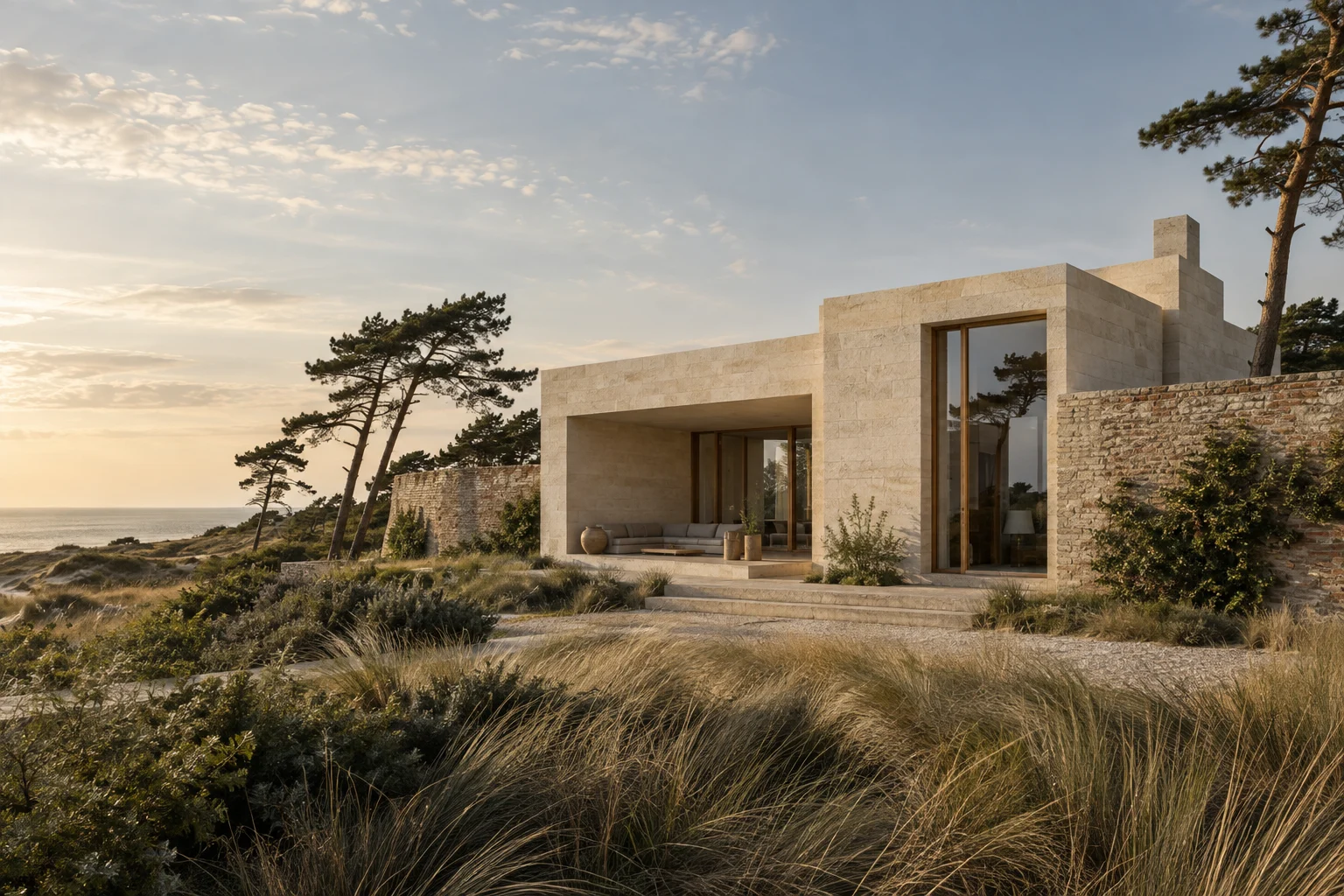
A window connects the interior with its surroundings. Its position influences sightlines, brightness, and the sense of intimacy or distance. In the fictional case study Haus am Meer, a deep loggia frames the landscape while creating a sheltered intermediate space.
Shadow is part of the equation
Good natural lighting does not mean fitting as much glass as possible everywhere. Shadow can bring tranquility, make proportions clear, and highlight materials. What matters is the interplay of opening, spatial depth, and surface.
Finding the right balance
The quality of a space cannot be reduced to the size of its windows. We ask where light is needed, where the view should lead, and which areas require privacy. The form follows from this, not the other way around.
The best thing about building on the existing is the opportunity to look more closely.
Nordlicht Fictitious design study